
Sofort verfügbar – Lieferbar in 3 Tagen!
17,90 €
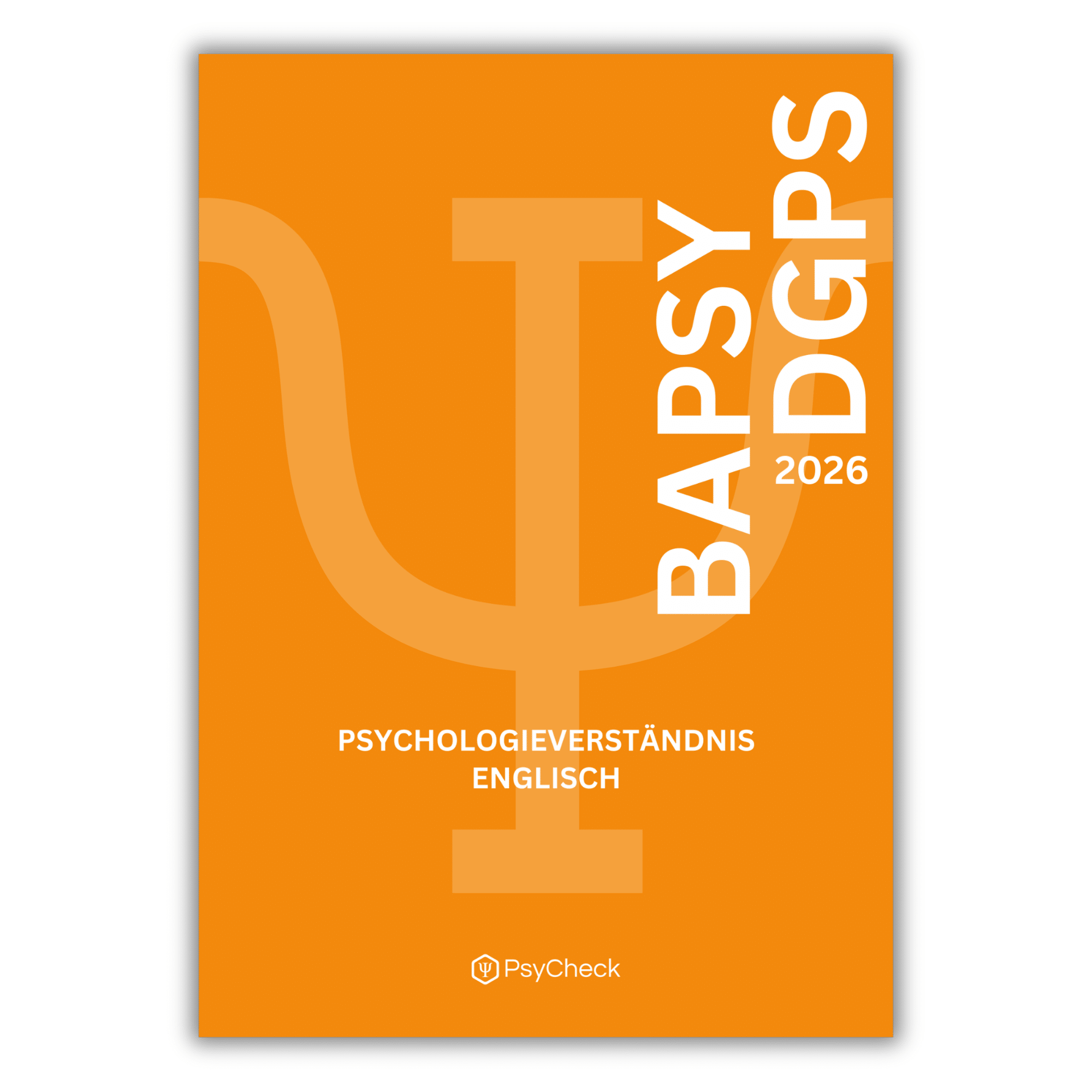
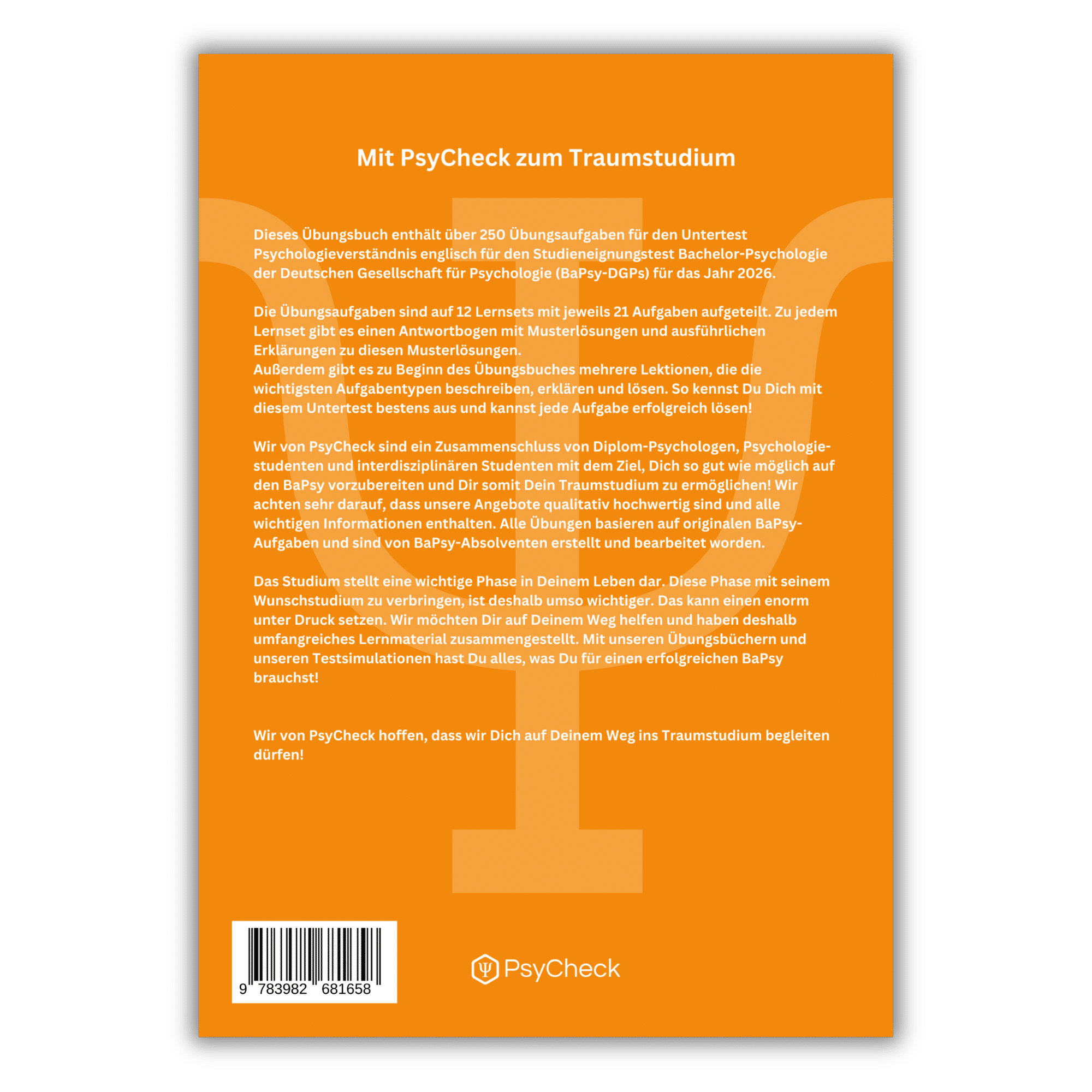
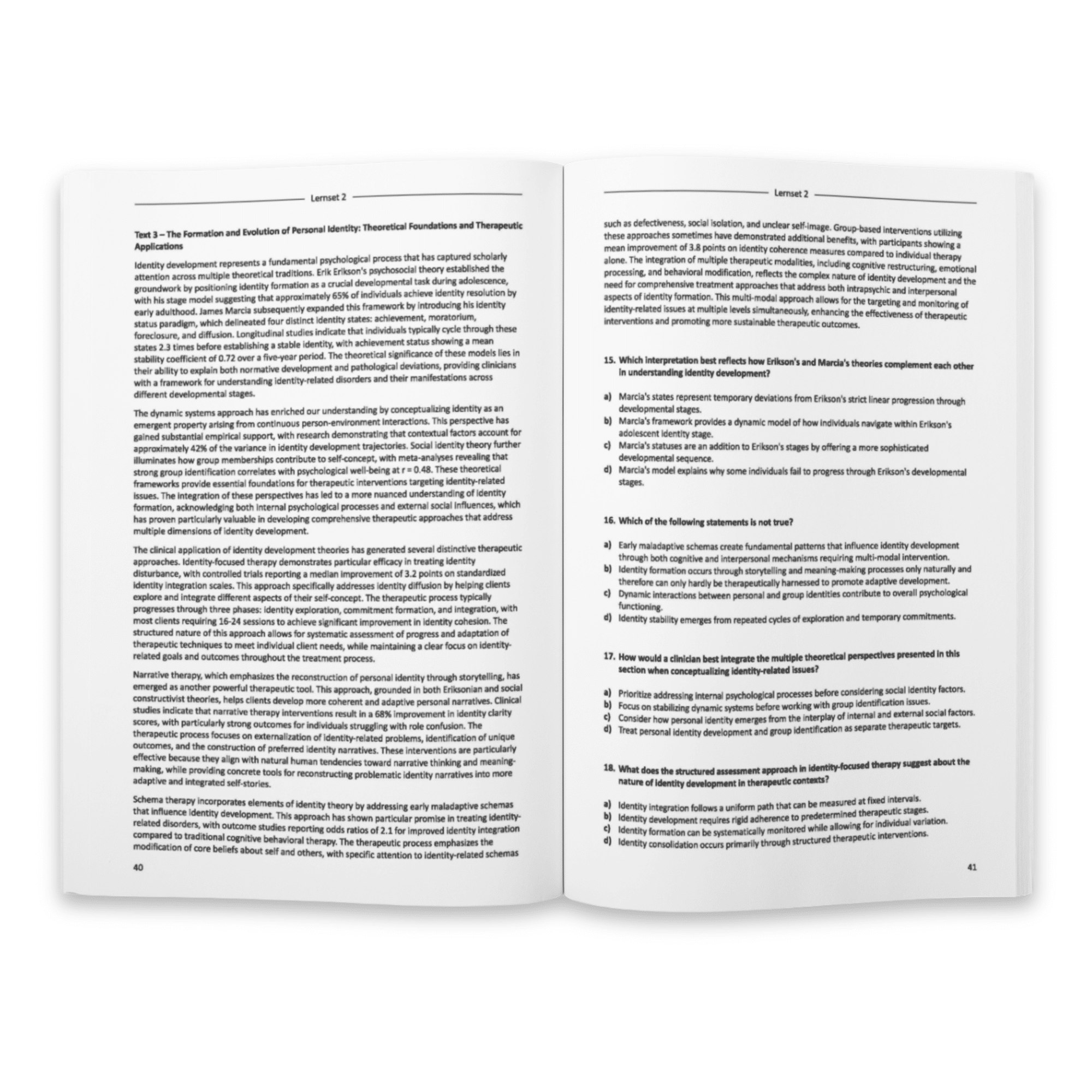
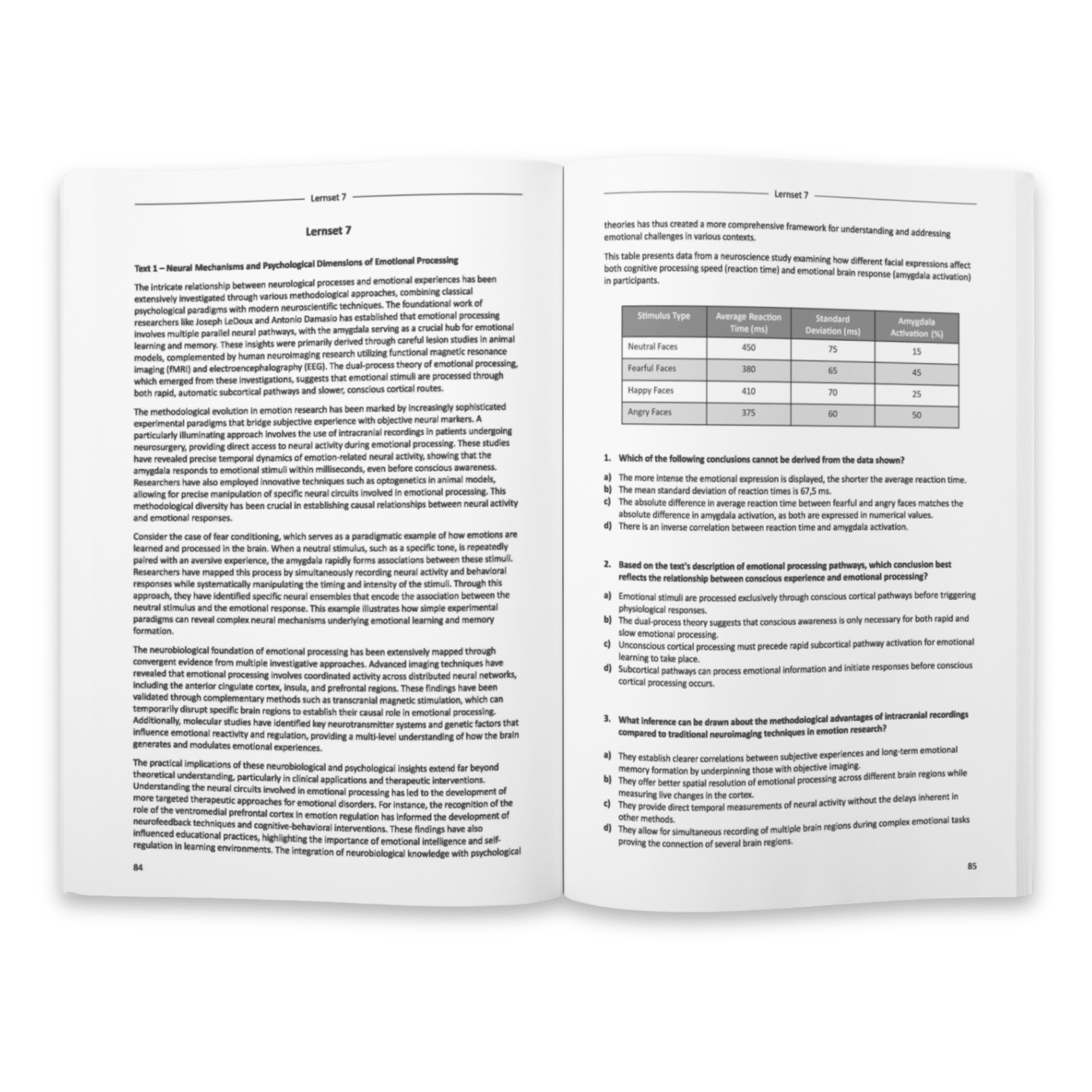
Dieses Übungsbuch bereitet Dich auf den Untertest Psychologieverständnis englisch im BaPsy vor. Genau wie der Untertest Psychologieverständnis deutsch besteht dieser Untertest aus komplexer Fachliteratur zu der mehrere Fragen gestellt werden, die Dein Textverständnis prüfen sollen. Die meisten Teilnehmer hatten noch nie mit psychologischer Fachliteratur auf deutsch zu tun und dasselbe gilt auch für englische Fachliteratur.
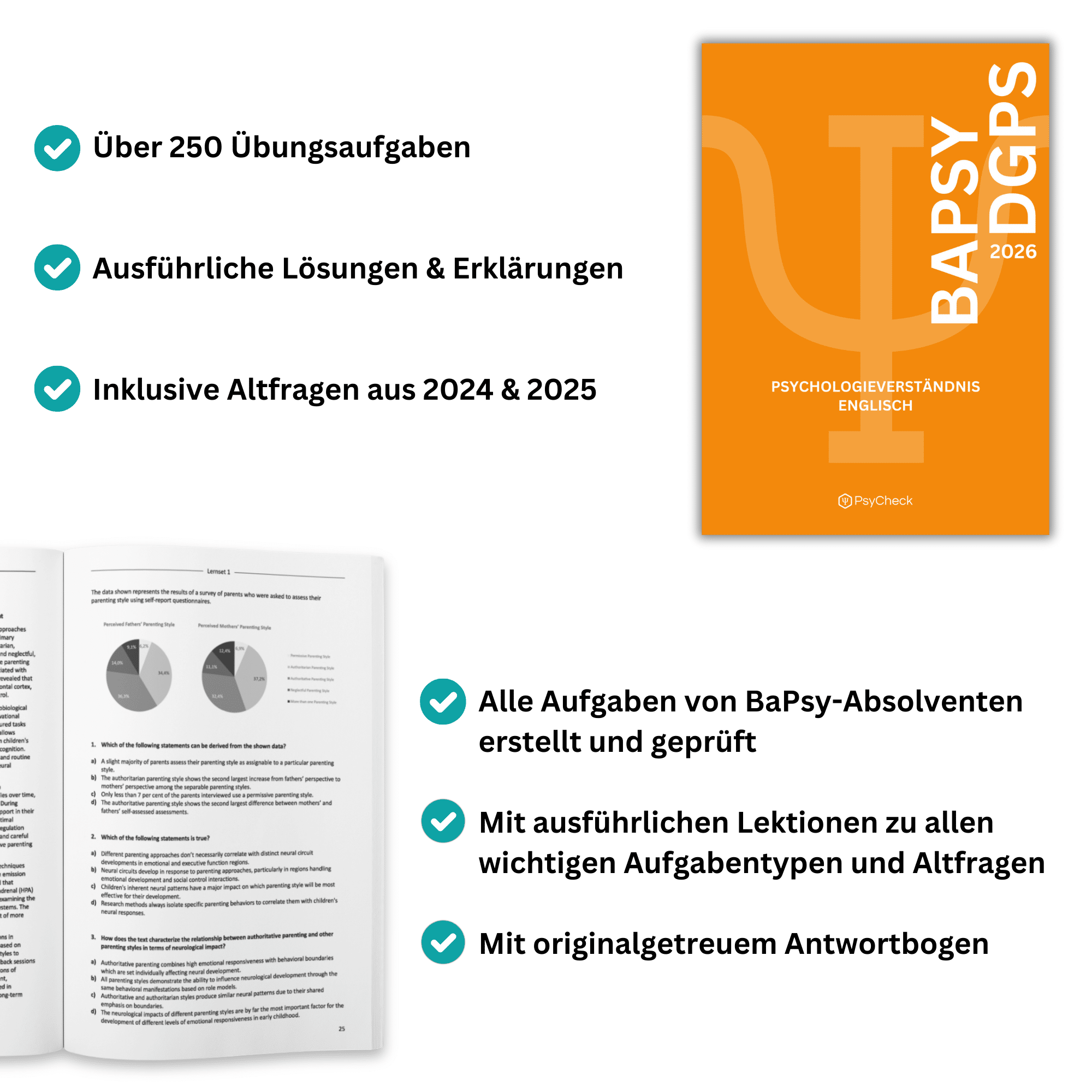
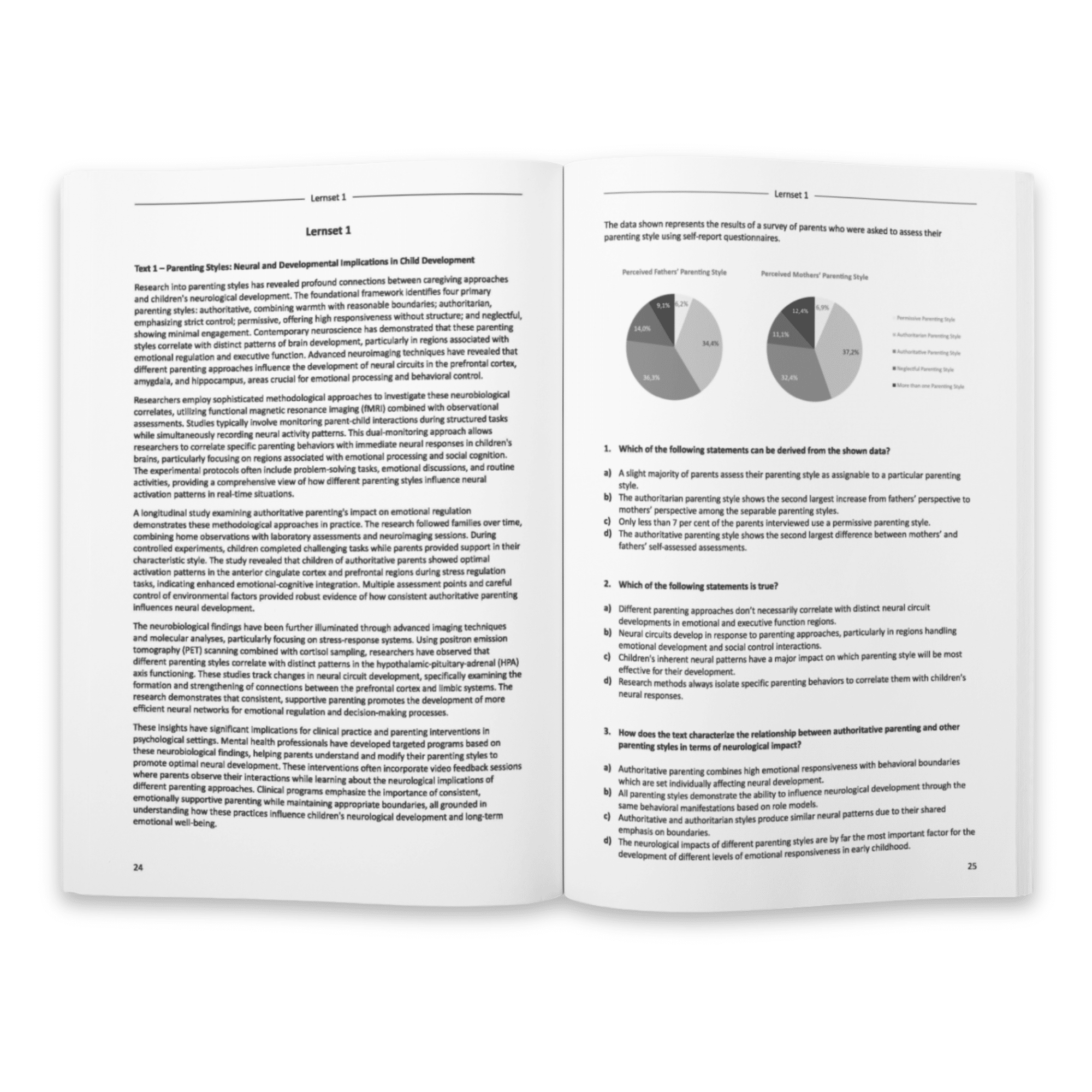
Mit 36 Texten und 252 Fragen enthält dieses Übungsbuch mehr als genug Übungsmaterial, um sich auf diesen Untertest vorzubereiten. Die Texte und Übungsaufgaben ermöglichen es Dir, Dich an die Schreibweise zu gewöhnen und trotz des Zeitdrucks und der komplex formulierten Fragen die richtige Antwort schnell auszuwählen. Die Texte decken eine Vielzahl an Themen ab, die bereits in den letzten Durchläufen enthalten waren und im kommenden BaPsy drankommen könnten. Darunter zählen: klinische Psychologie, allgemeine Psychologie, Sozialpsychologie und neuropsychologische Konzepte. Auch die Fragen und Antwortmöglichkeiten sind genau so konzipiert, dass sie den Anforderungen im BaPsy entsprechen und somit ideal für die Übung geeignet sind.
Zusätzlich zum Übungsmaterial enthält das Übungsbuch mehrere Lektionen, die Dir helfen sollen Dein Leseverständnis zu verbessern. Es werden konkrete Bearbeitungsstrategien vorgestellt und anhand von Beispielen erklärt, die Dir vor allem Zeit sparen sollen, denn für gewöhnlich hat man gerade so genug Zeit, den Text ein Mal vollständig zu lesen. Diese Bearbeitungsstrategien helfen Dir auch dabei, selbst ohne jegliche Notizen und Markierungen die Fragen sinnvoll und strukturiert zu bearbeiten. Da für die meisten Englisch nicht zu ihrer Muttersprache zählt, gibt es auch eine separate Lektion zu diesem Thema, die Dir helfen soll, trotz dieser Schwierigkeit den Text schnell und effektiv zu lesen und zu verstehen. Eine Lektion behandelt ebenfalls spezifisch das Problem mit den komplex formulierten Fragen und Antwortmöglichkeiten, die für Verwirrung sorgen und Dich Zeit kosten können.
Einfach gut.
Mit PsyCheck erhältst Du eine vollumfängliche BaPsy-Vorbereitung mit zahlreichen Aufgaben, Tipps, Strategien und Erklärungen zu einem unschlagbaren Preis-Leistungsverhältnis. Unser BaPsy-Lernmaterial enthält alle Facetten einer erfolgreichen Vorbereitung und bringt Dich beim Studieneignungstest für Psychologie problemlos an die Spitze!

Unsere PsyCheck-Community aus Psychologiestudenten und BaPsy-Absolventen unterstützt bei Deiner Vorbereitung auf den BaPsy und gibt Dir die Möglichkeit Dich mit anderen BaPsy-Teilnehmern zu vernetzen. Unser Support-Team hat den BaPsy erfolgreich absolviert und und kann Dir jede Frage beantworten.
Und das komplett kostenlos!
Alle BaPsy-Übungen wurden mithilfe von BaPsy-Absolventen des letzten Jahres erstellt. Sowohl thematisch als auch in ihrer Komplexität spiegeln sie die Anforderungen des BaPsy wider. Dadurch ist eine hohe Qualität der Aufgaben gewährleistet und Du erhältst hochwertiges BaPsy Lernmaterial!

Jedes unserer Bücher erklärt Dir im Detail wie Du Dich speziell auf die einzelnen Untertests vorbereiten kannst und welche Fehler Du besser vermeiden solltest. Mit den ausführlichen Erklärungen kannst Du jede Aufgabe nachvollziehen.
Ideal für Deine BaPsy Vorbereitung 2025!
Sie sehen gerade einen Platzhalterinhalt von Vimeo. Um auf den eigentlichen Inhalt zuzugreifen, klicken Sie auf die Schaltfläche unten. Bitte beachten Sie, dass dabei Daten an Drittanbieter weitergegeben werden.
Mehr InformationenSie sehen gerade einen Platzhalterinhalt von YouTube. Um auf den eigentlichen Inhalt zuzugreifen, klicken Sie auf die Schaltfläche unten. Bitte beachten Sie, dass dabei Daten an Drittanbieter weitergegeben werden.
Mehr InformationenSie müssen den Inhalt von reCAPTCHA laden, um das Formular abzuschicken. Bitte beachten Sie, dass dabei Daten mit Drittanbietern ausgetauscht werden.
Mehr InformationenSie sehen gerade einen Platzhalterinhalt von Vimeo. Um auf den eigentlichen Inhalt zuzugreifen, klicken Sie auf die Schaltfläche unten. Bitte beachten Sie, dass dabei Daten an Drittanbieter weitergegeben werden.
Mehr InformationenSie sehen gerade einen Platzhalterinhalt von YouTube. Um auf den eigentlichen Inhalt zuzugreifen, klicken Sie auf die Schaltfläche unten. Bitte beachten Sie, dass dabei Daten an Drittanbieter weitergegeben werden.
Mehr InformationenSie sehen gerade einen Platzhalterinhalt von Bunny Stream. Um auf den eigentlichen Inhalt zuzugreifen, klicken Sie auf die Schaltfläche unten. Bitte beachten Sie, dass dabei Daten an Drittanbieter weitergegeben werden.
Mehr InformationenSie sehen gerade einen Platzhalterinhalt von Wistia. Um auf den eigentlichen Inhalt zuzugreifen, klicken Sie auf die Schaltfläche unten. Bitte beachten Sie, dass dabei Daten an Drittanbieter weitergegeben werden.
Mehr InformationenSie müssen den Inhalt von reCAPTCHA laden, um das Formular abzuschicken. Bitte beachten Sie, dass dabei Daten mit Drittanbietern ausgetauscht werden.
Mehr InformationenSie müssen den Inhalt von hCaptcha laden, um das Formular abzuschicken. Bitte beachten Sie, dass dabei Daten mit Drittanbietern ausgetauscht werden.
Mehr InformationenSie müssen den Inhalt von reCAPTCHA laden, um das Formular abzuschicken. Bitte beachten Sie, dass dabei Daten mit Drittanbietern ausgetauscht werden.
Mehr InformationenSie sehen gerade einen Platzhalterinhalt von Turnstile. Um auf den eigentlichen Inhalt zuzugreifen, klicken Sie auf die Schaltfläche unten. Bitte beachten Sie, dass dabei Daten an Drittanbieter weitergegeben werden.
Mehr Informationen
Mark –
Schwierigkeiten sehr hoch der Texte in den letzten Lernsets, weshalb es wirklich anspruchsvoll wird, aber hilft ja nichts 😀